
Introduction: Life Around Mushrooms in the Forest
Forests are not made of trees alone.
They are complex ecosystems where plants, animals, insects, and fungi coexist in delicate balance. Among these, mushrooms play a central but often overlooked role, supporting a wide variety of forest animals—both directly and indirectly.
Understanding how mushrooms and animals interact helps us see forests as living communities rather than separate elements. In this article, we’ll explore the animals that live alongside mushrooms and why fungi are essential to woodland biodiversity.
Mushrooms as a Foundation of the Forest Food Chain
Mushrooms are a crucial part of the forest food web.
They contribute by:
-
Breaking down dead organic matter into nutrients
-
Enriching soil where plants grow
-
Providing food for insects and small animals
These processes create fertile environments that sustain larger animals higher up the food chain. Without fungi, many forest ecosystems would collapse over time.
This makes mushrooms not just companions to animals—but support systems for entire habitats.
Insects and Small Creatures That Depend on Mushrooms
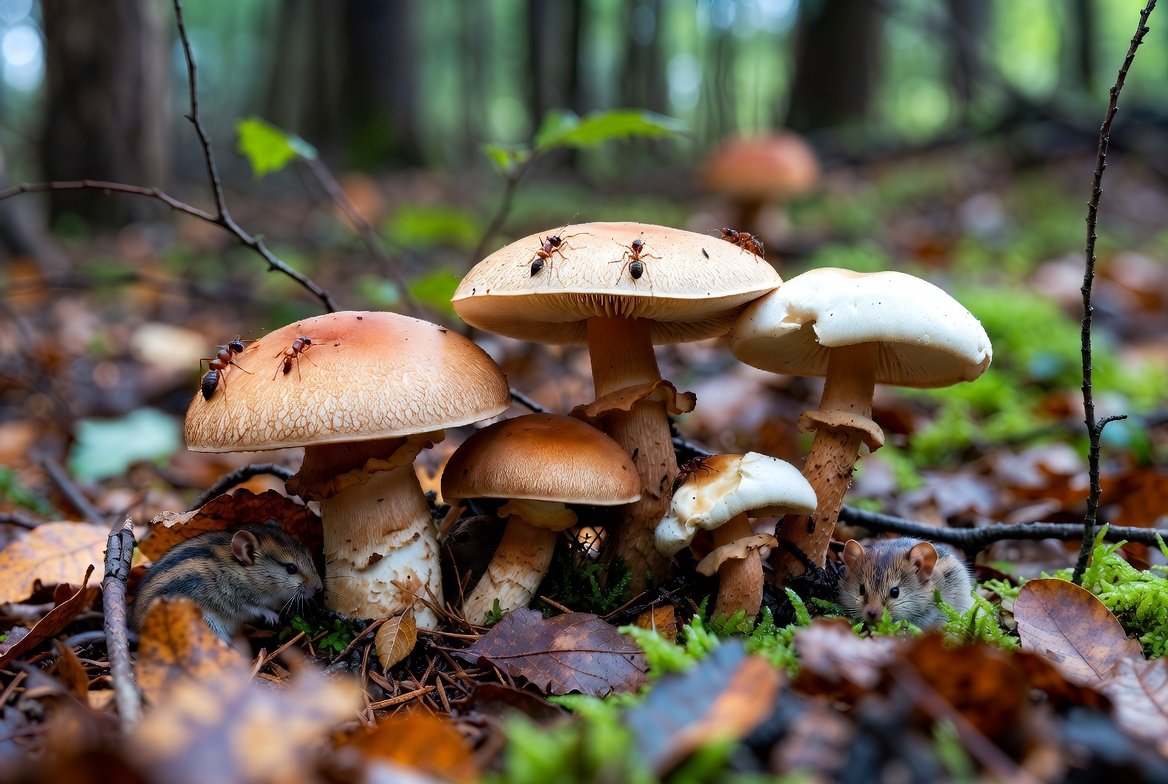
Many of the forest’s smallest residents rely directly on fungi.
These include:
-
Beetles and ants that feed on decaying mushrooms
-
Snails and slugs that seek moisture and nutrients
-
Larvae that develop inside fungal growth
Although small, these creatures play vital roles in pollination, soil health, and nutrient cycling. Mushrooms provide them with both food and shelter, especially in damp forest environments.
Mammals That Interact with Mushrooms
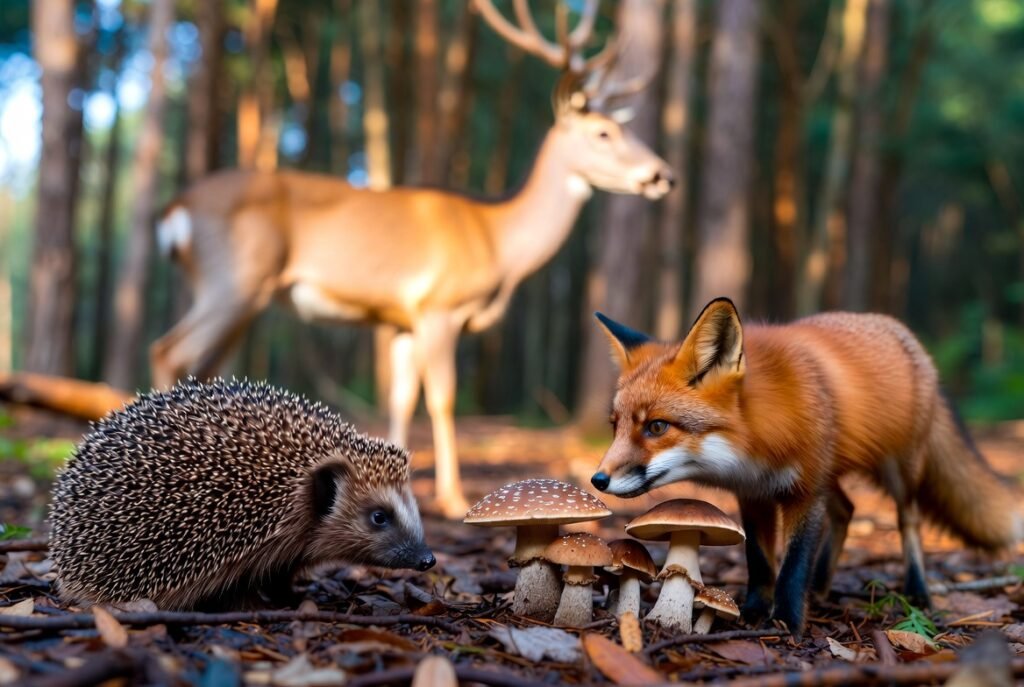
Several forest mammals also depend on fungi, even if we rarely notice it.
Examples include:
-
Hedgehogs and rodents that eat mushrooms or insects attracted to them
-
Deer that forage in areas where fungi enrich plant growth
-
Foxes and raccoons that hunt near mushroom-rich forest floors
By improving soil quality and supporting insects, mushrooms indirectly support mammals throughout the ecosystem.
Birds and Mushrooms: An Indirect Connection
Birds rarely eat mushrooms directly, but they still depend on them.
Mushrooms:
-
Increase insect populations birds feed on
-
Improve forest soil, supporting plants that produce seeds and berries
-
Create habitats for insects under bark and leaves
This indirect relationship shows how fungi influence even animals that never touch a mushroom themselves.
Mushrooms as Shelter and Micro-Habitats
Beyond food, mushrooms help shape forest environments by creating micro-habitats.
They grow on:
-
Fallen logs
-
Old tree stumps
-
Leaf-covered soil
These locations become safe spaces for insects, amphibians, and small mammals—especially during extreme weather. Mushrooms help regulate moisture and temperature at ground level, making forests more resilient.
Why Forest Animals and Mushrooms Feel So Comforting
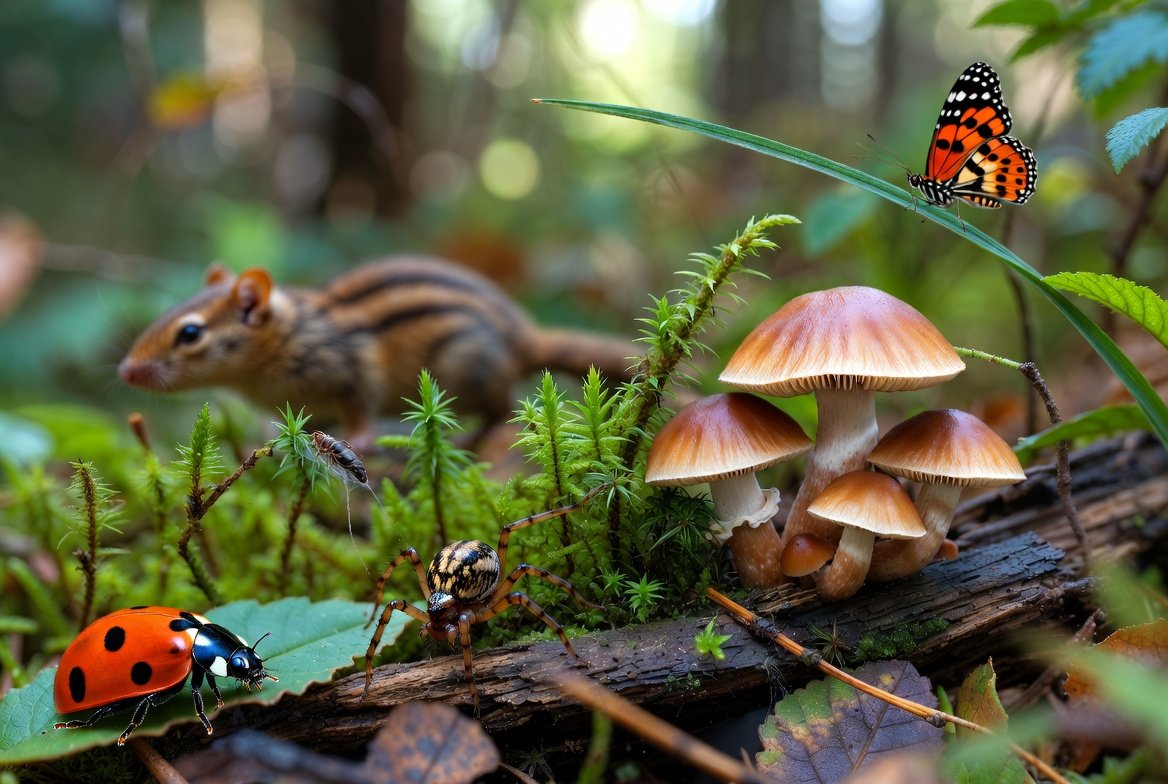
Scenes that combine mushrooms and forest animals naturally evoke calm.
This is because:
-
They represent balance and cooperation
-
They mirror healthy ecosystems
-
They remind us of slower, natural rhythms
Illustrations featuring mushrooms and animals often feel safe, friendly, and grounding—making them ideal subjects for mindful art and relaxation.
A Gentle Creative Connection
Learning about forest animals and mushrooms deepens our connection to nature—but experiencing that connection creatively can be even more powerful.
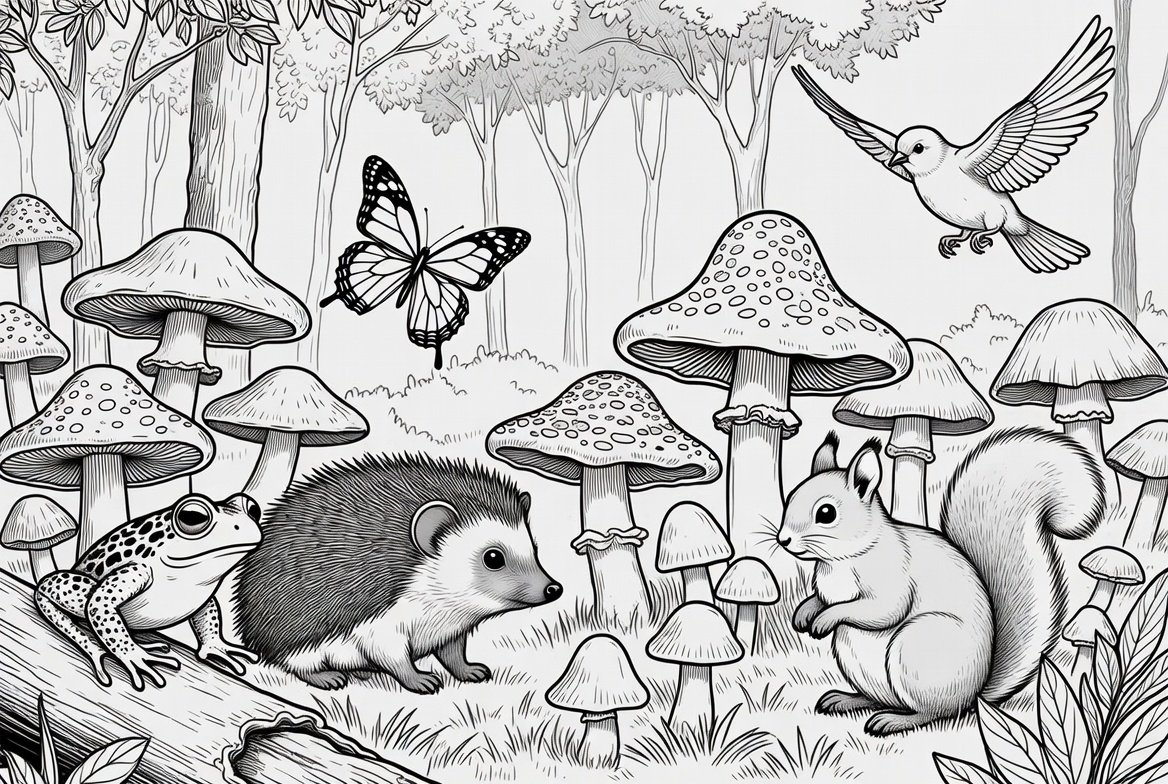
The Mushrooms & Forest Friends Coloring Book for Adults brings these relationships to life through:
-
Detailed woodland illustrations
-
Mushrooms as central elements
-
Gentle forest animals in natural scenes
-
One simple mushroom fact per page
It’s designed to support both curiosity and calm.
What’s Next?
In the next article, we’ll explore why mushrooms have inspired artists and illustrators for centuries—and why they remain timeless subjects in nature-inspired art.
Forests thrive through connection.
Mushrooms make those connections visible.
Read also: Mushrooms and Mindfulness