
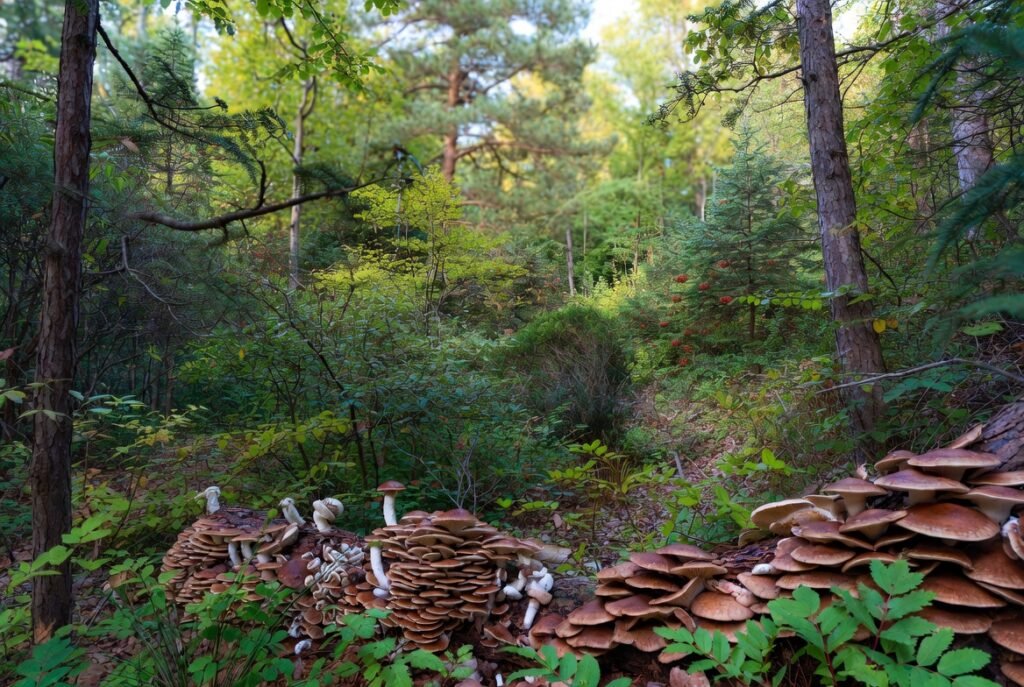
Introduction: Seeing the Forest Beyond the Trees
When people think of forests, they often picture tall trees and green canopies.
But the true beauty of a woodland ecosystem lies in its layers—from the treetops down to the forest floor. Each layer uniquely supports life, and mushrooms quietly connect them all.
In this article, we’ll explore how woodland ecosystems function, why mushrooms are essential to their balance, and how learning to notice these details deepens our connection to nature.
What Is a Woodland Ecosystem?
A woodland ecosystem is a complex natural system made up of:
-
Trees and shrubs
-
Plants and wildflowers
-
Animals and insects
-
Fungi and microorganisms
-
Soil, water, and climate conditions
These elements don’t exist separately. They depend on one another, creating a living network that evolves slowly over time. Mushrooms play a crucial role in maintaining this balance by supporting nutrient flow and soil health.
Mushrooms as the Forest’s Connective Tissue
Mushrooms act as connectors within woodland ecosystems.
Through underground mycelium networks, fungi:
-
Transport nutrients between plants
-
Help trees absorb water and minerals
-
Strengthen forest resilience against disease
This invisible system allows forests to function as unified environments rather than collections of individual plants.
Without mushrooms, woodland ecosystems would become fragile and inefficient.
Life on the Forest Floor
The forest floor is one of the most active parts of a woodland ecosystem.
It is home to:
-
Fallen leaves and decaying wood
-
Insects, snails, and amphibians
-
Mushrooms breaking down organic matter
This layer is where nutrients are recycled and returned to the soil. Mushrooms make this process possible by decomposing material that plants alone cannot break down.
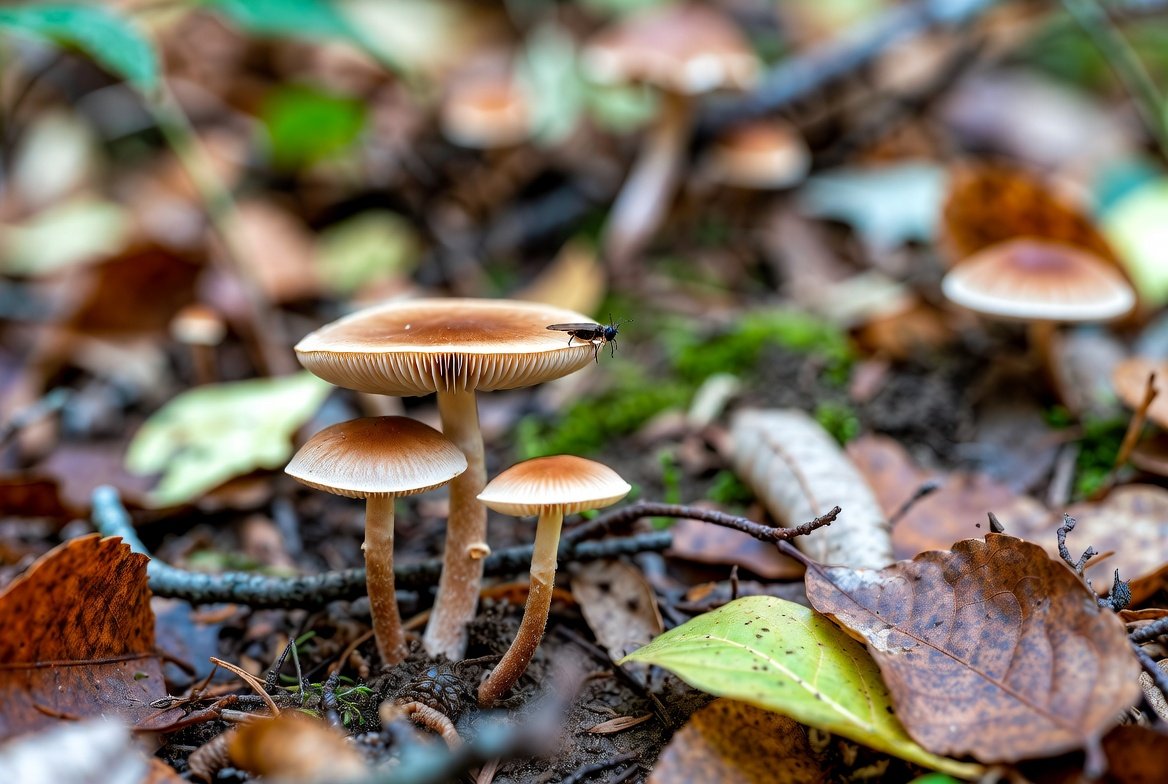
How Woodland Ecosystems Support Biodiversity
Healthy woodland ecosystems support diverse life forms.
Mushrooms contribute to biodiversity by:
-
Improving soil fertility
-
Supporting insects that feed birds and mammals
-
Creating micro-habitats in decaying wood
As biodiversity increases, forests become more stable and adaptable to change.
Mushrooms are key to this quiet strength.
Why Learning About Ecosystems Brings Calm
Understanding how woodland ecosystems work can be surprisingly calming.
It reminds us that:
-
Nature thrives through cooperation
-
Everything has a role
-
Balance emerges without force
This perspective aligns naturally with mindfulness and slow living. Learning about ecosystems isn’t just educational—it’s grounding.
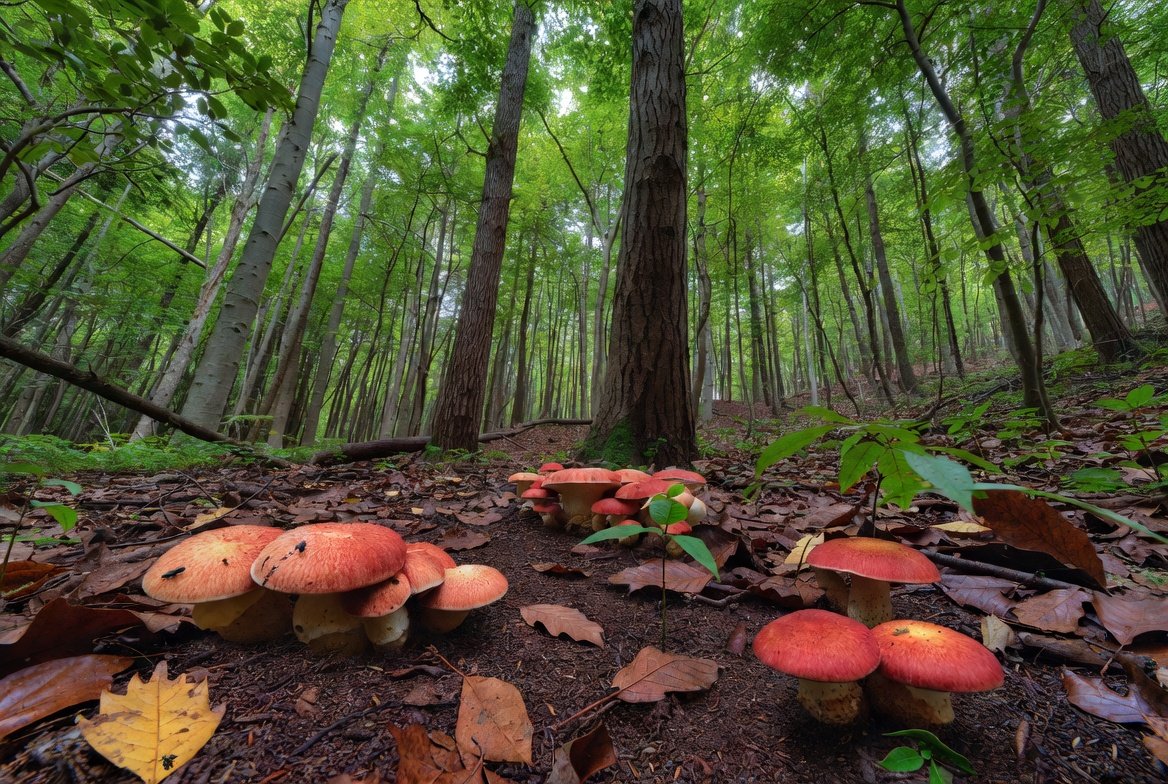
Experiencing Woodland Beauty Through Art
Illustrations of woodland ecosystems allow us to:
-
Observe details we often miss outdoors
-
Appreciate relationships between species
-
Engage with nature creatively and mindfully
Mushrooms are often central in these scenes because they visually and symbolically connect forest elements.
Coloring woodland ecosystems transforms learning into a peaceful, creative experience.
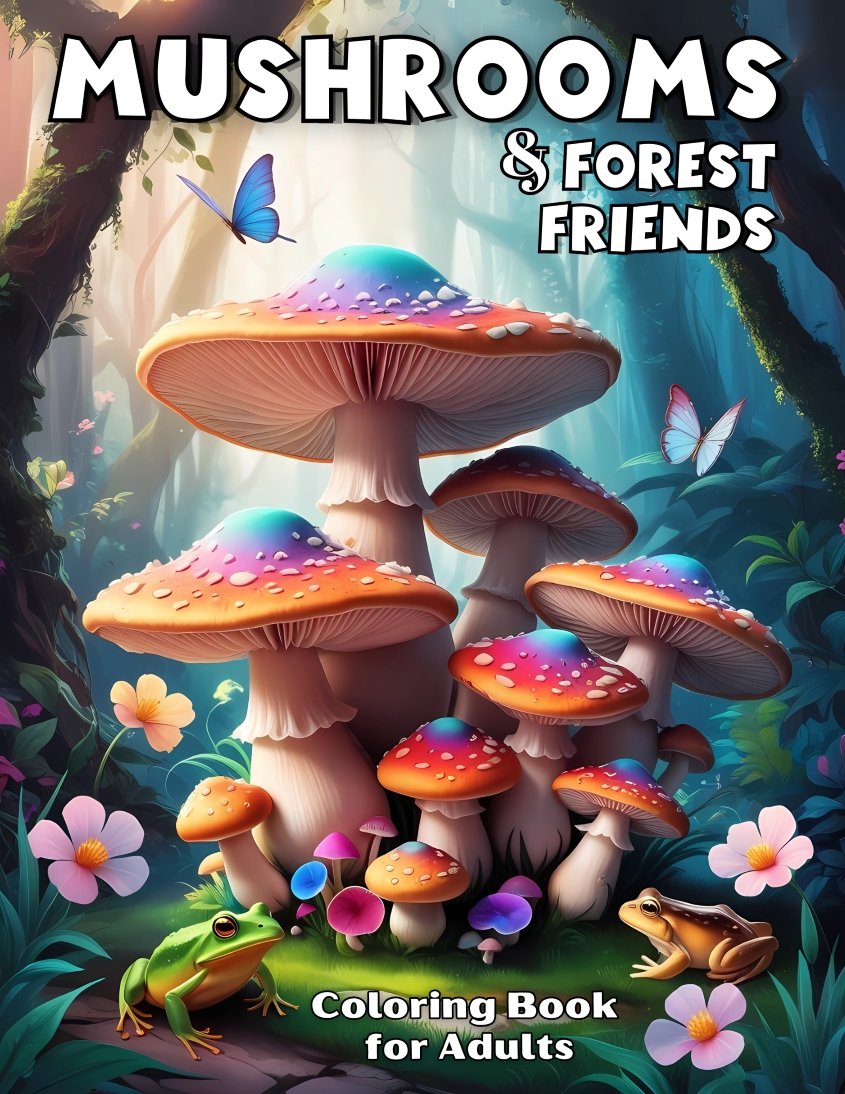
A Gentle Creative Connection
If exploring woodland ecosystems feels calming and inspiring, there’s a natural way to continue that connection.
The Mushrooms & Forest Friends Coloring Book for Adults brings woodland life together through:
-
Detailed forest scenes
-
Mushrooms as central elements
-
Friendly animals and plants
-
One simple mushroom fact on each page
It offers a way to experience ecosystems not just intellectually, but creatively.
What’s Next?
In the next article, we’ll explore how coloring nature scenes reduces stress and why mushrooms and forests are ideal subjects for relaxation.
Forests reveal their beauty slowly.
Mushrooms help us notice it.