
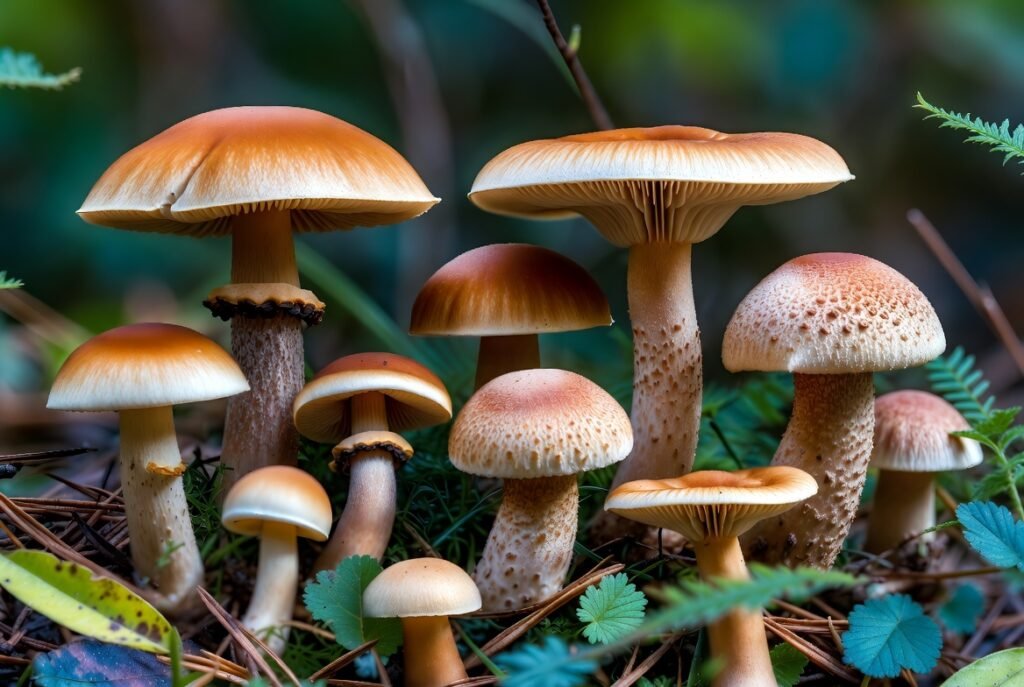
Introduction: Mushrooms Beyond Biology
Mushrooms are not only biological organisms—they are visual storytellers.
Across cultures and centuries, mushrooms have appeared in paintings, illustrations, folklore, children’s books, scientific drawings, and modern nature art. Their unusual forms and quiet presence make them instantly recognizable and endlessly fascinating to artists.
In this article, we’ll explore why mushrooms inspire artists and illustrators, how fungi connect science with imagination, and why mushroom imagery continues to feel timeless and calming.
Unique Shapes That Spark Creativity
Mushrooms don’t follow strict geometric rules.
They feature:
-
Rounded caps and soft curves
-
Irregular growth patterns
-
Natural symmetry mixed with unpredictability
These organic forms feel less rigid than architecture and less chaotic than wild landscapes. For artists, this balance makes mushrooms ideal subjects—structured enough to guide the eye, yet free enough to encourage creativity.
This is especially true in illustration and line art, where mushrooms translate beautifully into clean, flowing outlines.
Mushrooms in Folklore, Myth, and Storytelling
Mushrooms have long been linked to myth, mystery, and imagination.
In folklore, they are often associated with:
-
Fairy rings and hidden worlds
-
Forest spirits and magical creatures
-
Transformation, growth, and rebirth
These symbolic meanings made mushrooms popular visual elements in illustrated stories and fairy tales. Even today, mushroom imagery often signals a world that is gentle, mysterious, and slightly enchanted.
Artists use mushrooms to suggest wonder without danger, making them especially appealing in calming or mindful art.
Scientific Illustration Meets Art
Mushrooms also occupy a special place between science and art.
Botanical and mycological illustrations require:
-
Careful observation
-
Attention to detail
-
Respect for natural structure
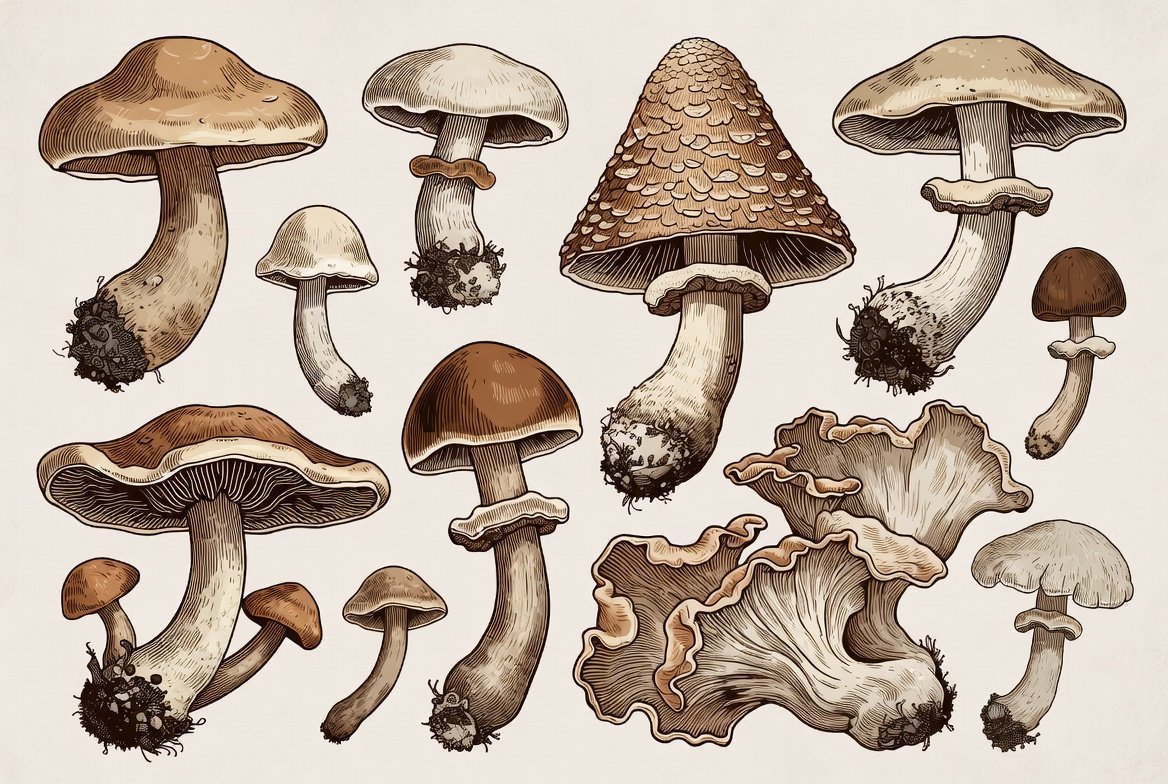
Over time, these scientific drawings influenced artistic styles, blending accuracy with beauty. This tradition still shapes modern mushroom illustration—especially in educational yet relaxing formats like nature-based coloring books.
Mushrooms allow artists to express curiosity and calm at the same time.
Why Mushroom Art Feels So Relaxing
There’s a psychological reason mushroom art feels soothing.
Mushroom illustrations often include:
-
Repeating natural patterns
-
Gentle contrasts
-
Balanced compositions
These qualities reduce visual tension and help the brain settle into a relaxed focus. That’s why mushrooms frequently appear in mindful art, slow-living visuals, and adult coloring books.
They encourage attention without overstimulation—ideal for stress relief and creative flow.
Mushrooms as Symbols of Nature’s Balance
In art, mushrooms often symbolize:
-
Renewal after decay
-
Cooperation within ecosystems
-
Life emerging quietly
These themes resonate deeply in modern life, where many people seek balance, calm, and reconnection with nature. Mushroom imagery becomes a visual reminder that growth doesn’t need to be loud or fast to be meaningful.
Artists return to mushrooms again and again because they represent quiet resilience.
Mushrooms in Modern Nature-Inspired Art
Today, mushrooms are everywhere in creative spaces:
-
Nature illustration and journaling
-
Home decor and prints
-
Mindful coloring books and slow art
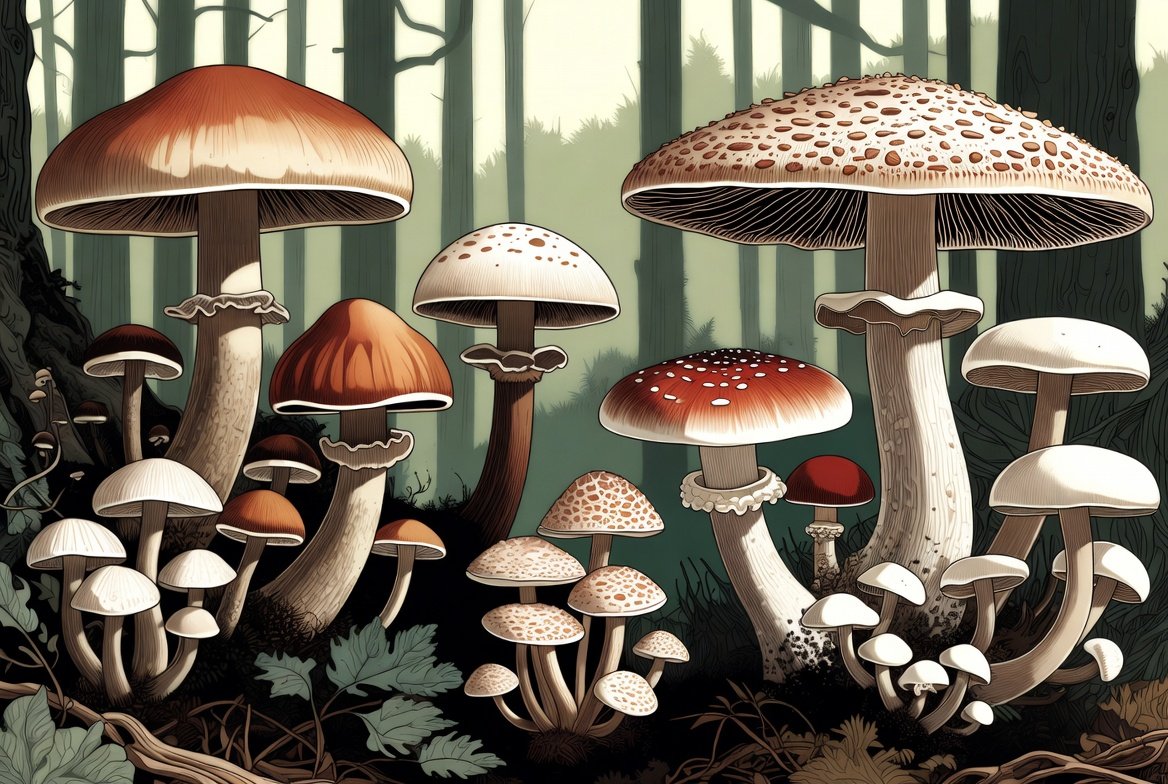
Their popularity reflects a broader movement toward nature-inspired creativity—art that comforts rather than impresses, invites participation rather than performance.
Mushrooms are approachable. Anyone can draw or color them, regardless of skill level.
A Gentle Creative Path
If you’re drawn to mushroom art, you’re not alone.
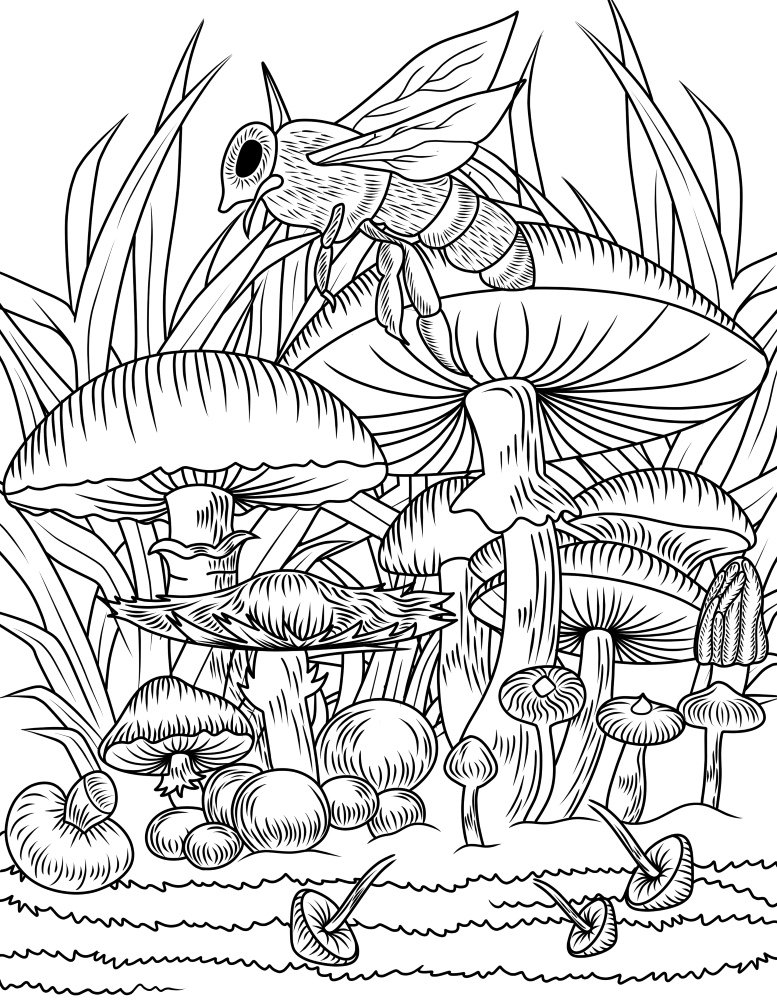
The Mushrooms & Forest Friends Coloring Book for Adults was created with this artistic tradition in mind:
-
Hand-drawn mushroom illustrations
-
Forest scenes inspired by real ecosystems
-
Gentle animals and natural patterns
-
One simple mushroom fact per page to deepen context
It’s a creative space where art, nature, and calm come together naturally.
What’s Next?
In the next article, we’ll explore the hidden beauty of woodland ecosystems and how mushrooms help shape the forests we often take for granted.
Art helps us see.
Mushrooms teach us how to look.
Pingback: The Hidden Beauty of Woodland Ecosystems - Florin Stanciu
Pingback: How Coloring Nature Scenes Reduces Stress - Florin Stanciu